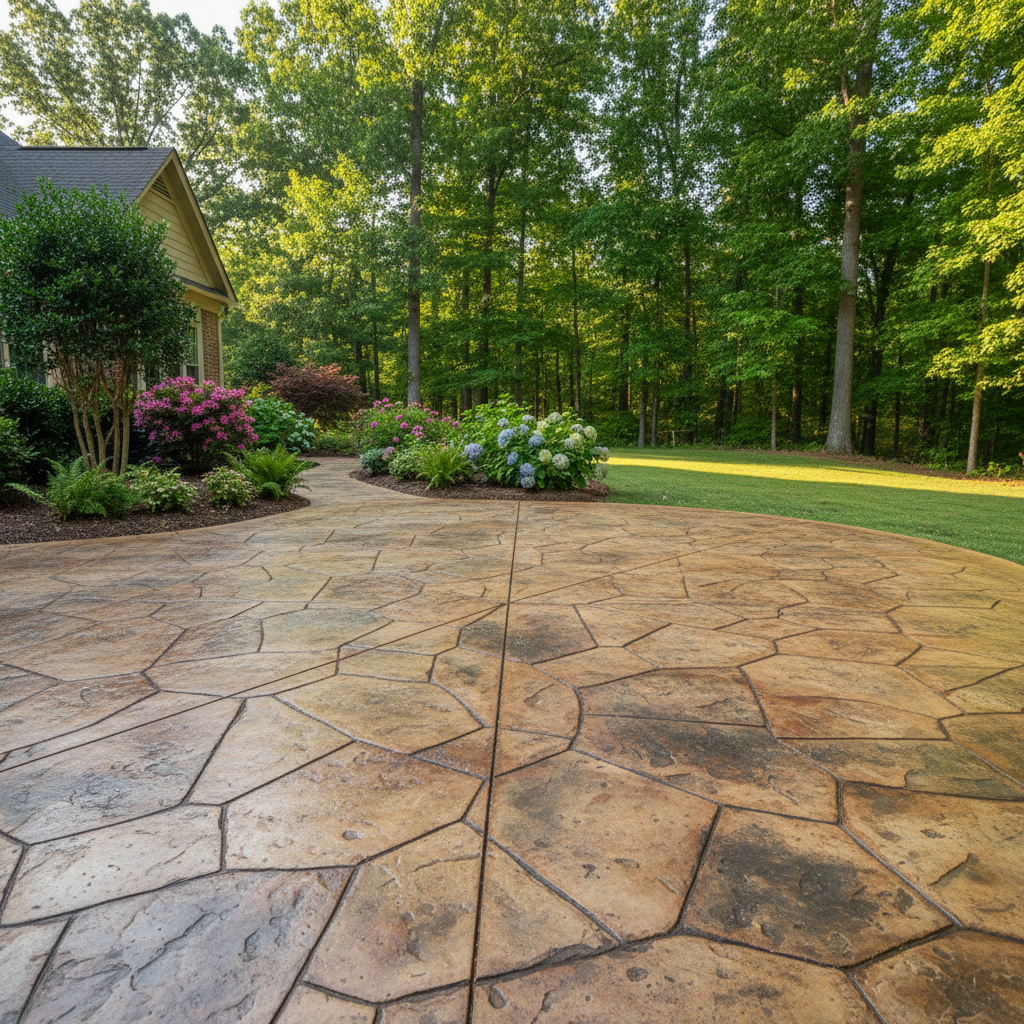
So, you're probably wondering when the best time is to get that beautiful stamped patio or stained concrete floor done. It's a really good question, especially with our Birmingham weather. Decorative concrete isn't just about pouring and stamping, you know; it's about getting the timing right so it looks good and actually lasts.
Why Birmingham's Climate Really Matters for Decorative Concrete
Our climate here in Birmingham — it's a bit of a mixed bag, isn't it? We get those hot, humid summers and then mild, but sometimes pretty wet, winters. That's why I always tell folks, you can't just pick any old day to do decorative concrete work. Temperature and humidity play a huge role in how the concrete cures, how the colors take, and how the sealers perform. It's critical.
For instance, those scorching July and August days? They're tough. The concrete can dry too fast, which often leads to cracks or an uneven finish. Stains might not penetrate properly, and sealers can bubble if it's too hot and humid. On the flip side, if it's too cold, the concrete takes forever to cure, and that can mess with its strength and durability. We've just got to hit that sweet spot.
Best Times to Schedule Your Decorative Concrete Project
From what I've seen over the years, the ideal times for decorative concrete work around here are spring and fall. Think April, May, September, and October. The temperatures are usually moderate then, not too hot, not too cold. And the humidity is generally lower than in summer, which is perfect for staining and sealing.
- Spring (April-May): The ground's thawed out, and we're past the worst of the winter freezes. The days are getting longer, and temperatures consistently hit that 60-80 degree range that concrete just loves.
- Fall (September-October): After the summer heat finally breaks, this is another prime window. The air is crisp, and the concrete has plenty of time to cure before any deep freezes hit.
Now, can we do it in summer or winter? Sometimes, yes, but it definitely comes with challenges. In summer, we might have to start super early in the morning or work later in the evening to avoid the peak heat. In winter, we're watching the forecast like hawks for freezing temperatures. If it's going to dip below 40 degrees Fahrenheit for an extended period, especially right after the pour, we'll likely reschedule. We don't want the water in the concrete to freeze before it's had a chance to properly hydrate, because that's a recipe for weak, flaky concrete, and nobody wants that.
Protecting Your Decorative Concrete Investment Year-Round
Once you've got that beautiful decorative concrete patio or driveway, you want it to stay that way, right? It's not just about the initial pour; it's about ongoing care. Here's what I tell all my GAE Concrete Co. clients:
- Keep it Clean: Regular cleaning is huge. Sweep off leaves and debris. For tougher grime, a mild detergent and a good scrub brush work wonders. Just avoid harsh chemicals or pressure washers that are too powerful, as they can damage the sealer or even the concrete surface.
- Reseal Periodically: This is probably the most important thing. The sealer protects your decorative concrete from stains, UV rays, and general wear and tear. Depending on how much traffic it gets and how exposed it is to the elements, you'll want to reseal it every 2-5 years. You'll know it's time when water stops beading up on the surface.
- Watch for Cracks (and address them): While we do everything we can to prevent them, concrete can crack. If you see small hairline cracks, don't panic; sometimes they're just surface-level. But if they start to widen or become trip hazards, give me a call. We can usually repair them before they become a bigger problem.
- Beware of De-icers: If we get one of those rare icy spells here, be super careful with de-icing salts. Many of them, especially those containing ammonium nitrates or sulfates, can wreak havoc on concrete, particularly if it's newly installed or not properly sealed. Sand is usually a safer bet.
- Protect from Heavy Loads: Try not to park heavy equipment or vehicles on decorative concrete that wasn't designed for it. A patio is different from a driveway, and putting too much weight on it can cause damage.
Taking care of your decorative concrete isn't rocket science, but it does require a little attention. Do these things, and your investment will keep looking great for years. If you've got questions about your specific project or need some advice, don't hesitate to reach out to GAE Concrete Co. We're always happy to help our neighbors here in Birmingham.