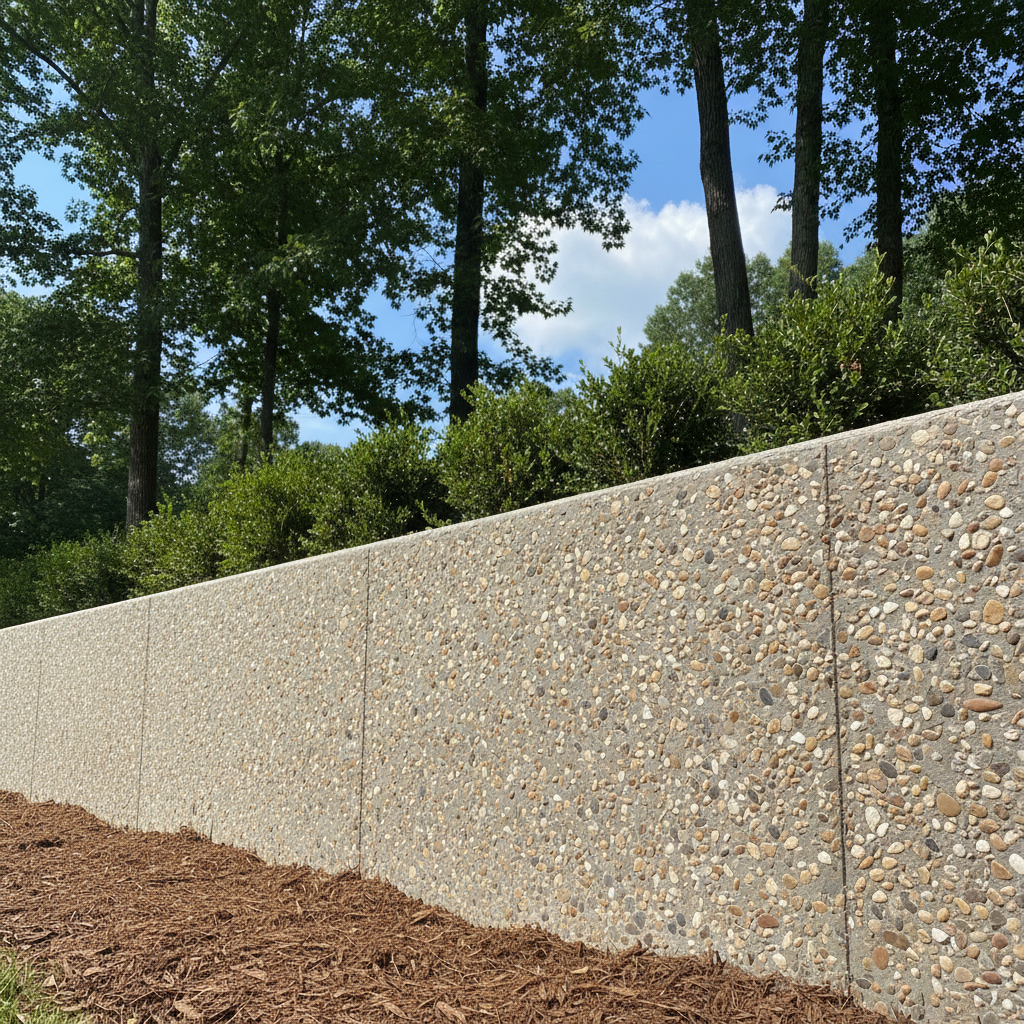
Thinking about putting in a retaining wall on your property? Smart move, doing your homework. I get a ton of questions about these, especially here in Birmingham where we've got plenty of hilly spots and that tricky red clay that just loves to shift. A well-built retaining wall isn't just about looking good; it's really about protecting your home, your yard, and sometimes even your neighbor's place. Let's dig into some of the most common questions I hear from folks just like you.
What's a retaining wall actually do?
Plain and simple, a retaining wall holds back dirt. If your yard has a slope, whether it's natural or something you created, that soil is always trying to move downhill. Gravity, rain, erosion – they all team up to make it happen. A retaining wall acts like a solid barrier, stopping that soil from sliding, washing away, or collapsing. This can help you make flat, usable areas on a sloped lot, keep foundations safe from damage, or manage where rainwater goes. It’s a structural piece, not just a garden decoration, and it absolutely has to be built correctly.
Why should I pick concrete for my retaining wall?
Sure, you've got choices for retaining walls – wood, natural stone, those segmented blocks. But if you ask me, and for most situations, concrete is the best bet. First off, it's incredibly strong and built to last. It can handle the massive pressure of tons of soil pushing against it, year after year. It also sticks around for a very long time; we're talking decades, not just a few years like some timber walls. Concrete is pretty flexible too. We can pour it right there on site for one solid, continuous structure, or we can use precast blocks. We can reinforce it with rebar for even more strength, which is often a must around here with our heavy rains and that infamous Alabama red clay. Plus, you can finish it in all sorts of ways – stamped, stained, or even faced with stone – so it doesn't have to look like a plain gray slab if you don't want it to, you know?
When do I really need a retaining wall?
You probably need a retaining wall if you're dealing with a noticeable slope that's causing problems. Maybe you've got erosion washing away your good topsoil, or water pooling up near your house's foundation after one of our heavy summer storms. If you're trying to create a level patio or a garden spot on a sloped yard, you'll definitely need one. Sometimes, a wall is essential to support a driveway or a building put up on a hillside. If you're seeing cracks in your foundation that seem connected to soil moving, or if your yard is just too steep to actually use, it's time to think about a wall. Don't wait until you're staring at a major washout, believe me.
Do I need a permit for a retaining wall in Birmingham?
Most likely, yes, you will. We're not talking about a small garden fence here. The City of Birmingham and Jefferson County have specific rules for retaining walls, especially if they're above a certain height (often 4 feet, but always double-check current codes) or if they're close to property lines or public rights-of-way. These walls are structural, and if they fail, the consequences can be pretty serious. You'll often need drawings from an engineer, particularly for taller walls or those holding back a lot of weight. As GAE Concrete Co., we always make sure to check all the local requirements and handle the permitting process. Trying to skip this step is a huge gamble and can lead to fines, stop-work orders, or even having to tear down a wall you just finished building.
How long do concrete retaining walls last?
A concrete retaining wall that's been designed and installed correctly, especially one that's poured-in-place and reinforced, can easily last 50 to 100 years, maybe even more. Just think about some of the old concrete structures you see around town – they really stand the test of time. The big secret is proper drainage behind the wall, enough reinforcement, and a solid foundation. If water gets to build up behind the wall, or if the foundation isn't stable, even concrete can give out too soon. That's why hiring an experienced contractor who really gets soil mechanics and drainage is so, so important.
What about drainage? Is that a big deal for retaining walls?
Absolutely critical. In fact, I'd argue drainage is just as important as the concrete itself, maybe even more so. Water is the arch-enemy of any retaining wall. If water gets trapped behind the wall, it creates hydrostatic pressure, which can be enormous. It's like a giant, invisible hand pushing on your wall, you know? This pressure can crack, bow, or even collapse a wall, no matter how strong the concrete is. That's why we always include a really good drainage system, usually with gravel backfill, perforated pipes (weep holes), and sometimes even geotextile fabric to keep soil from clogging everything up. The whole point is to let water pass through or around the wall without building up pressure. Without good drainage, your wall is basically a ticking time bomb.
How much does a concrete retaining wall cost?
Ah, the million-dollar question, and honestly, there's no single answer without us seeing your specific situation. The cost depends on a bunch of things: the wall's height and length, the type of concrete (poured-in-place versus block), how much digging is needed, how easy it is to get equipment onto the site, the soil conditions (that Birmingham red clay can be a real pain to dig through!), what kind of reinforcement is required, and how complex the drainage system needs to be. A small, simple wall might run you a few thousand dollars, while a big, engineered wall on a steep slope could be a lot more. My best advice? Get a detailed estimate from a reputable contractor like GAE Concrete Co. We'll come out, check out your site, and give you a clear breakdown of all the costs involved. Don't just pick the cheapest bid; remember, this is a structural part of your property that you want to last.
Hopefully, this clears up some of your questions about concrete retaining walls. They're a big investment, but a necessary and worthwhile one for many Birmingham homeowners. If you're ready to talk specifics about your property, just give us a call.